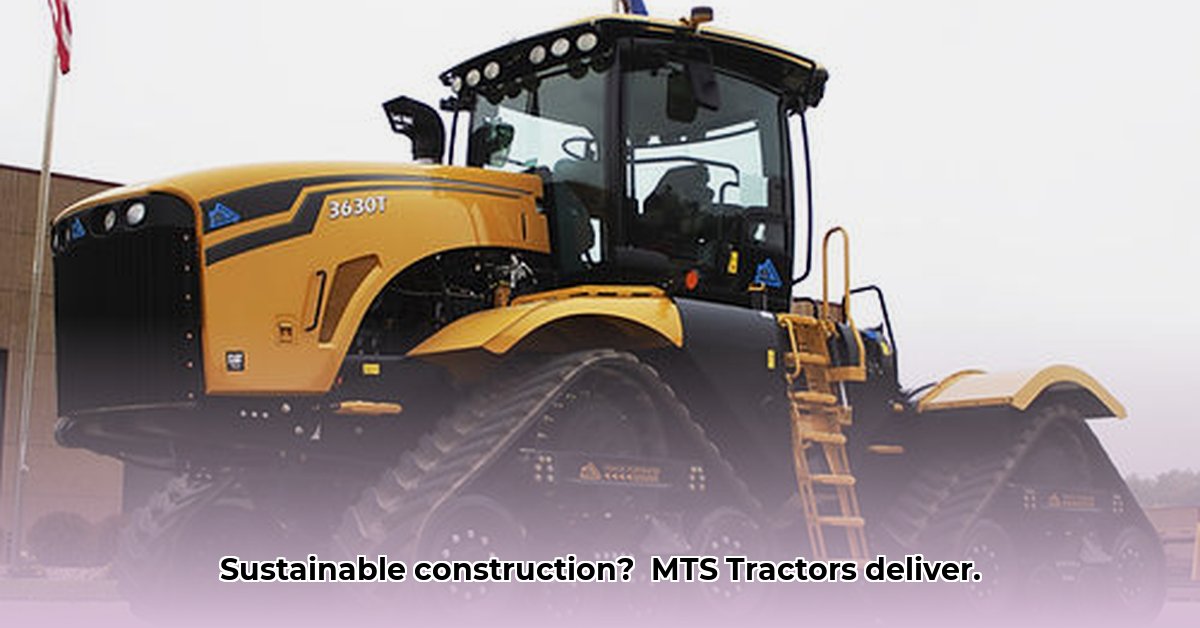
MTS Tractor: Paving the Way for Eco-Friendly Construction
Building sustainably requires efficient and reliable equipment. The MTS tractor, with its robust design and focus on operational efficiency, presents a compelling option for environmentally conscious construction projects. This analysis explores its durability, efficiency, environmental impact, and the steps needed to maximize its sustainability potential. We'll also examine the regulatory landscape and actionable recommendations for stakeholders. For cost comparisons, see tractor pricing.
Durability and Reliability: A Workhorse Built to Last
Downtime equates to lost revenue and increased environmental impact due to wasted resources. The MTS tractor, incorporating a Caterpillar C18 engine and Cat TA22H transmission, is engineered for minimal downtime. Extensive testing at Caterpillar's Peoria Proving Grounds (a rigorous 12-week trial) underscores its resilience. The construction-grade ROPS (Rollover Protective Structure) certification prioritizes operator safety. Heavy-duty components contribute to reduced breakdowns, minimizing fuel consumption and repair needs – ultimately making it more environmentally sound.
Efficiency and Operational Advantages: Optimizing Performance and Reducing Waste
Maneuverability is crucial in construction, particularly on challenging terrain. The MTS tractor's articulated steering system enhances navigation around obstacles and uneven ground, reducing wear and tear, and potentially lowering fuel consumption. The "walking beam" suspension further minimizes component stress, extending their lifespan. Additional features, such as the decelerator pedal and cold-weather package, optimize performance across varying conditions, maximizing efficiency and minimizing resource waste. Isn't operational efficiency a key component of sustainable construction?
Environmental Impact Analysis: Transparency and Future Needs
While the MTS tractor complies with Tier IV emission standards—a significant achievement in reducing harmful emissions—a comprehensive environmental assessment is needed for a complete picture. A full lifecycle assessment (LCA) is essential. This would analyze the entire product lifecycle, from material sourcing to disposal, providing a complete picture of its environmental footprint. Currently, data gaps exist regarding fuel consumption specifics and detailed component sourcing information. Collaboration with Caterpillar to acquire this data is crucial for a robust LCA.
Sustainability of Component Sourcing: The Supplier Perspective
Caterpillar parts are renowned for reliability and serviceability, contributing to the tractor's longevity. However, sustainable construction demands transparency in component sourcing. Questions about the use of recycled materials and end-of-life management procedures require clear answers. Understanding Caterpillar's manufacturing processes and their commitment to environmental stewardship is crucial for a complete sustainability evaluation.
Actionable Recommendations: A Collaborative Approach
Maximizing the MTS tractor's sustainability requires a collaborative effort across the supply chain. The following recommendations are crucial:
MTS Tractor Manufacturer: Publish comprehensive data on fuel efficiency and emissions; conduct a thorough LCA; collaborate with suppliers committed to sustainable practices; explore alternative powertrain technologies (hybrid or electric).
Construction Companies: Implement pilot programs to assess the long-term cost savings and environmental benefits; integrate tractor data into sustainability reports for progress monitoring.
Regulatory Bodies: Monitor Tier IV emission standards compliance; support stricter regulations to drive further improvements; encourage manufacturers to share environmental impact data transparently.
Material Suppliers: Conduct LCAs on all materials; develop sustainable sourcing strategies emphasizing recycled and renewable resources.
Regulatory Implications: Adapting to Evolving Standards
The current Tier IV emission compliance is a major step toward sustainability. However, environmental regulations are constantly evolving, demanding proactive monitoring and adaptation. Transparency with regulatory bodies is key for maintaining compliance and a competitive edge.
Conclusion: A Promising Future, Requiring Further Investigation
The MTS tractor presents a promising path toward sustainable construction. However, a comprehensive LCA and complete transparency regarding component sourcing are crucial for a complete picture. By focusing on collaboration and data-driven decision-making, we can unlock the full sustainability potential of this technology and build a greener future for the construction industry. The need for further research and collaboration with key stakeholders remains paramount.